Our new site for OB News has now been running for two months and thanks for the feedback so far.
I was half expecting someone to ask me if they can post comments on here. I haven’t yet discovered how to achieve this but I am not yet convinced it is a good idea to nudge the site towards the Facebook model. You are very welcome to make comments on anything you see here, and send them to me in a message. I can then make an editorial decision about whether, and how to publish these comments.
A reminder that our original website (www.bhchs.co.uk) will continue to be used for archiving, and to hold the database which has details of when you were at BHCHS and other details. We’d love to keep in contact with all former pupils so if you think I may not have your current email address please contact me. Also, if you know of others who may not be in our network please direct them here.
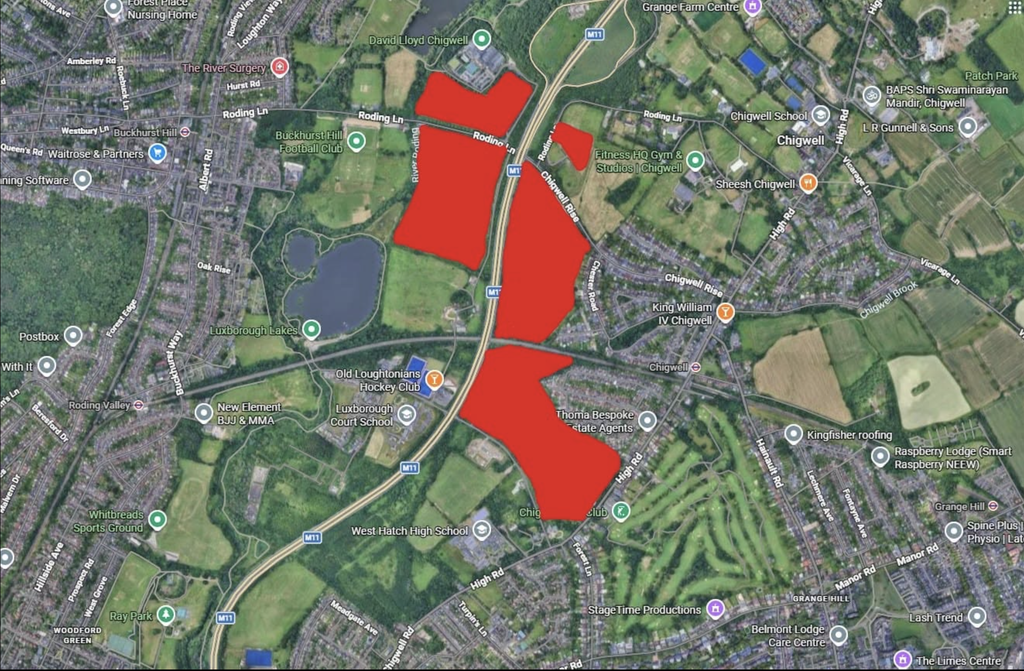
Thanks to Michael Turner (BHCHS 1981-86)for alerting us to a potential new development in Roding Lane. Based on this map, it appears to be around 6 times the size of the original proposal that made no progress after two years of consultation.
Michael found this on the public Facebook group Buckhurst Hill Life and so far there is no other information about the development, or even who is responsible for it. So until more information emerges we should not assume that it is even genuine.
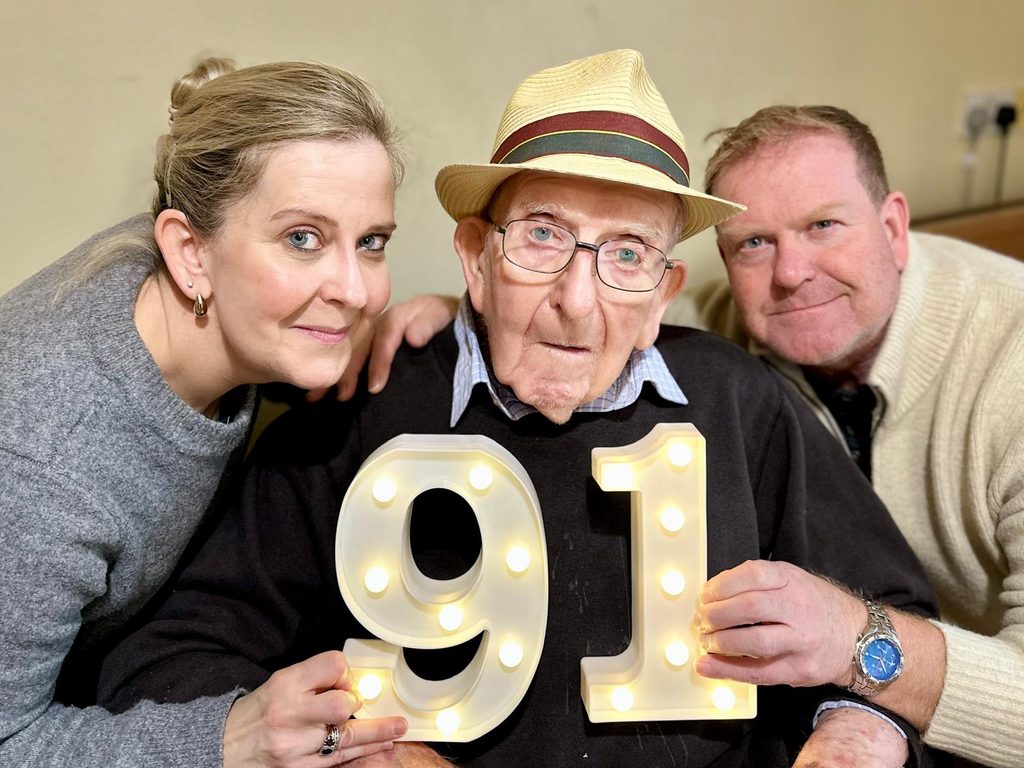
I have just heard that Ted Moran (BHCHS 1946-51) died on 5th September at the age of 91. The sad news was given to me by his daughter Liz Webber who has kindly kept Ted in contact with us through the last few years, and it reminded me that there are so many relatives who have help us in this way. They are among the unsung heroes of the Old Buck network.
Ted had a remarkably varied and busy career as a teacher, spending a large chunk of his adult life teaching in various countries in Africa. He gave us a comprehensive summary in our November 2003 edition, soon after we’d traced him via Friends Reunited. See page 18 for Ted’s contribution.
More recently, and thanks to Liz, we had managed to re-connected with Ted again after he had returned from South Africa. We reported this in January 2023…..
Here is an even more recent photo of Ted, celebrating his 91st birthday. Again, thanks to Liz for sending this.
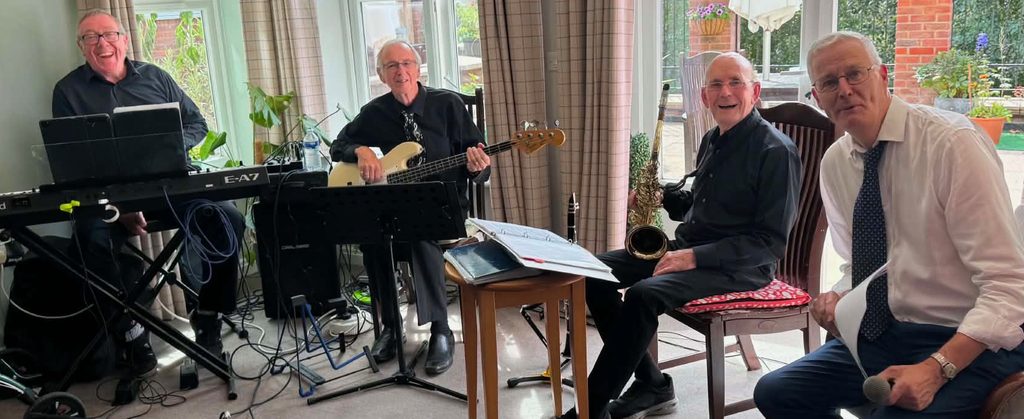
John Glasscock (BHCHS 1967-74) is keeping busy bringing music to appreciative audiences and helping worthwhile charities at the same time. Seen here with some of his band, John is on the left.
John writes……
I have been running a jazz band since 2003 when a group of us who attended an evening class, ‘Play Jazz’, at a local college formed a band and played at the open day of a local children’s hospice. Since then we have played at local venues in and around Basingstoke including village fetes, birthday parties, weddings, and jazz themed lunches.
I am a member of the Basingstoke Bridge Club and one of the members suggested that we should have a bridge club jazz band to play at the club Christmas party. That was in autumn 2023. Since then we have played regularly for community groups – including care homes, events supporting charities or mental health groups. We use these events to promote the bridge club and the benefits that playing bridge offers for mental health and social well being. We don’t charge for performing but we suggest a small donation for a charity which each of the band members nominates. We have 7 members of the band with a wide variety of experience. However, we all get great pleasure from sharing our enjoyment of playing together.
For me, the most memorable moment was when we played for a group of people who suffered with mental health issues. At the end, one of the carers approached me to thank the band and said that she had been looking after a lady for over 2 years, during which time she hadn’t spoken a single word. But through our performance, she sang along to a number of the tunes that we played (well known jazz standards) which brought a tear to her eye.
So as well as sharing the joy of making music together we all get immense satisfaction from hearing the positive feedback that we receive from each of the groups for whom we play.
If you click the link below, it will open a PDF that contains all the printed editions of OB News. It is a very large file, so you will need patience to view the whole file. I am also uncertain whether the file will enable a full search. But it should allow you to view all editions.
Jim Faulkner (BHCHS 1949-56) died on 21st August 2026. Jim had been an organiser of the legendary “49ers”. I have got the funeral details, and hope to publish an obituary in due course. Also, I have been advised that there will be a video of the funeral and I expect to be able to share this with anyone who would like to see it.
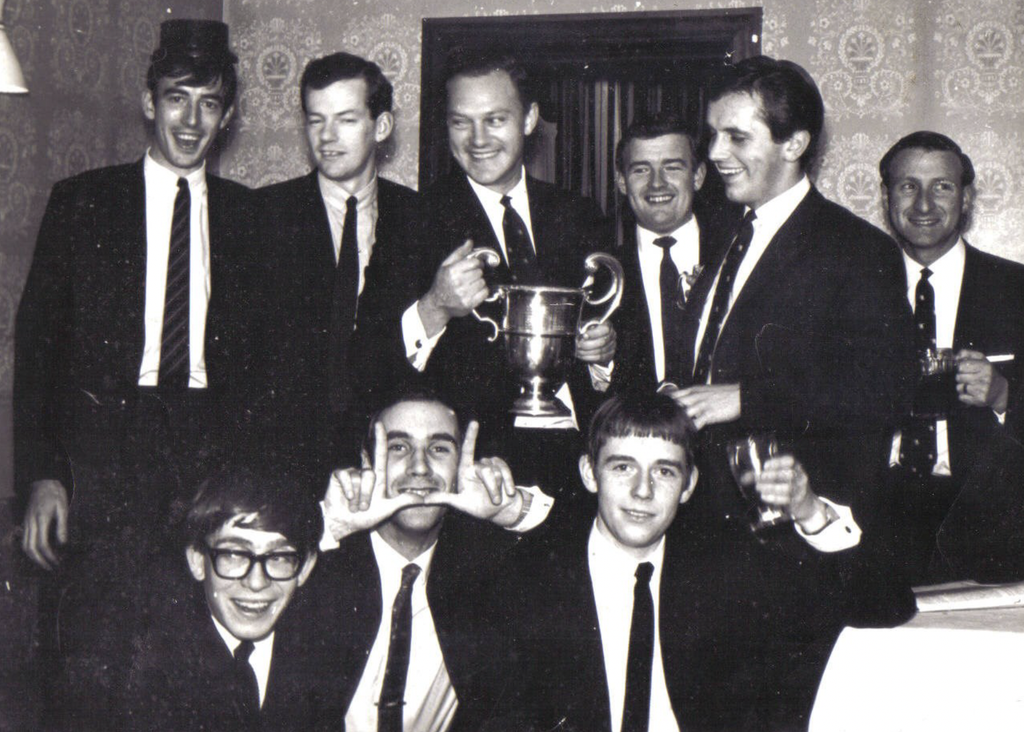
Jim Faulkner (4th from the left back row) was a member of the OBA football team that won the first division of the London Old Boys League in the early 1950s. Team captain, holding the trophy, was Trevor Lebentz.
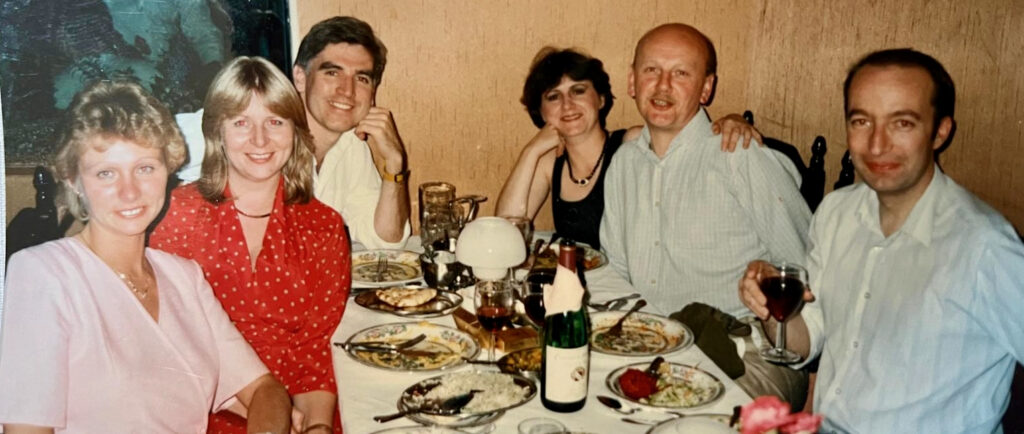
David Pattrick (right) and John Loveridge with friends at a staff social c. mid-70s
To join the staff of BHCHS in 1973 as I did was in some ways to leap back in time – some of the older staff seemed to be not just from an earlier decade but from a previous century, and some of the younger to have been acquired like furniture, ready-aged. John was a shining exception. Foot-loose and all too evidently fancy-free, he bounced balletically into the staffroom as fresh at the end of a period as when he left, full not only of energy but also flamboyance and élan; I never sat in on one of his lessons, but walking past his room was to see classes transfixed at a virtuoso performance. There could be heard laughter: in some other classrooms, learning hurt. Ex-students reading this may not have realised that the curtain did not come down at the end of their lesson but was merely the prelude to a five-act extravaganza followed by the post-production party. His Woodford pied à terre was a social hub – for the only society that mattered, of course – even if its dimensions did not permit the swinging of a cat; not that one would have attempted this with his ferocious ginger tom, Fazzoletto (named not only for girth but, as in Verdi’s Otello, an instrument of doom). To be with John socially was to be amazed and similarly inebriated by his joie de vivre – he lit up a room when he entered: like Falstaff, not only witty in himself but the cause of wit in others. Actually, the comparison with Falstaff would have been more appropriate in his earlier years – his home displayed a birthday card with the legend “Billy Bunter loves Rita Hunter” – Miss Hunter an amply constituted Wagnerian soprano. By the time I met him, he had lost a lot of weight, fitting into 28 inch waist trousers; he cut out the comb-over, grew a moustache and, thanks to a pay rise for teachers and the magic of credit cards, his wardrobe, record collection and debt grew exponentially.
There was though something obsessional, almost manic about the maintenance of this façade and it did begin to take its toll. He always suffered from insomnia and had periodic bouts of depression – there were occasions when he simply walked out of school. In my production of Twelfth Night, for example, he was a marvellous Sir Andrew Aguecheek, but until the actual performance, I was in doubt whether he would take the stage. In the event, something – call it esprit de corps, or more likely rioja – got him through it. Sadly, a mooted staff production of Rattigan’s Harlequinade with him in a rôle that suited him perfectly (pure ham, darling) never materialised. He was happier in John Rippin’s musical arrangements for the optimistically named Buckhurst Sinfonia, where a prominent part in the percussion department satisfied all his leanings towards melodrama without taxing him beyond having to count up to four – something which, as John Rippin said, was beyond the musical abilities of the side-drumming Deputy Headmaster (allegedly a maths graduate).
It would be all too easy to classify John as a typical opera queen, but his response to music went much deeper and was a major factor in his life. In fact he almost did not become a teacher – he wrote to the head of Covent Garden begging a job of any kind there; Sir David Webster, for better or worse, interviewed him and talked him out of this. I remember him explaining to me how Tosca at a vital moment believes God will forgive her jealous outburst in church (and ultimately her murder of Baron Scarpia) because passion and pain are intimately intertwined. He knew by heart the Italian text for this opera and understood from the inside its sub-text. John never stuck to the predictable – hearing one beautiful aria by Dvorak, he went out and bought as many obscurely Slavonic operas as Barclaycard would let him. Obviously, we were fascinated by one entitled “The Devil and Kate”: we both thought Miss Coulson would win that battle, though, to be fair, she was particularly kind to the two of us she called “my boys”. If you had asked me to guess which composers would never figure at his funeral, Sibelius and Handel would be high on the list, but there they were.
The aria he loved that spoke to and of him most eloquently came from Strauss’s Arabella: Aber der Richtige. Glorious music: she sings of the man who is the right one – “he will stand before me, all at once, his eyes on me, mine on him, and no more doubting will remain, no more asking, and I shall be happy and obedient as a child.” John dreamed of this happening to him. But Arabella also sings, in the prelude to this aria: “A man may quickly mean much to me, but suddenly he means no longer anything.” And this was closer to John’s actual experience, running the risk of queer-bashing, of arrest and, at the end of the 1970s, the threat of Aids. Sadly, as far as I know, he had no enduring loving partnership in his life. In fact, any friend whose emotional proximity became uncomfortable he would quite ruthlessly cut out of his life. Several at his funeral who had been his closest friends at one time, who (like me) had loved him, had stories of the hurt this rejection entailed. He had a gift for inspiring affection, but not, arguably, one for reciprocity.
I had only intermittent touch with him after he left BH: I never knew whether his subsequent placement at a North Essex unit for pupils excluded from mainstream education was his choice or a peculiarly cruel effect of the ironically named “carousel” for distribution of jobs after the school closure. At any rate, it gave him a fund of stories about the “penal colony” as he called it. And yet, in a way, being relieved of responsibility to do anything other than survive to the end of the day rather suited him. He often told me that his ideal job would be as a “trolley dolly” at Tesco; when he left Brentwood School to go to Norfolk, long before he might have been expected to retire, this was a step in the direction of such release.
I have played the organ at enough funerals to know that when all the personal qualities of the deceased have been adumbrated, the question is left, what did this life achieve, what did it amount to? I can say that the years I was close friends with John at BH were quite wonderful. Knowing him changed me as a person; I still throw in phrases that were part of his lexicon: “May these be the worst of our days” as a toast; “Shitbags” as a swearword, or “sacs de merde” when in France; “We need to sacrifice some more virgins” when the weather turns beastly. There are pieces of music I cannot listen to without thinking of him, imagining him there; arias revisited with sadness after his death. And yet, that time came to an end. I believe though that his years at BH were, like those of Miss Jean Brodie, his prime; lucky those ex-students reading this who had him as a teacher or form tutor. He was – excuse the clichéd pun – a class act.
I cannot close this without a tantalising postscript. Throughout his time at BH, John, like Kenneth Williams (whom in many other ways he resembled) kept a diary – obsessively, a page of A4 every day. He was a gifted writer (and lively correspondent) as well as raconteur; I imagine these diaries give a far better picture of his life and the life of the school at that time than any increasingly vague memories of such as myself. As in the famous cartoon of his beloved Jane Austen, perhaps they may be deemed fit for publication “when all the effing and blinding are taken out”.
Vince Mulholland (BHCHS 1977-83), possibly our only international cricketer, is currently in Canada as part of the Over 60s England touring side competing against many other cricketing nations.
You can dip into the programme HERE. Turn to page 15 for Vince’s profile.
Vince took a wicket for England in their first match, against Scotland on 10th August. England won the match by 9 wickets. Their second match is against West Indies, just getting underway now. So if you are quick, you may see Vince in action because all the matches are being live streamed HERE.
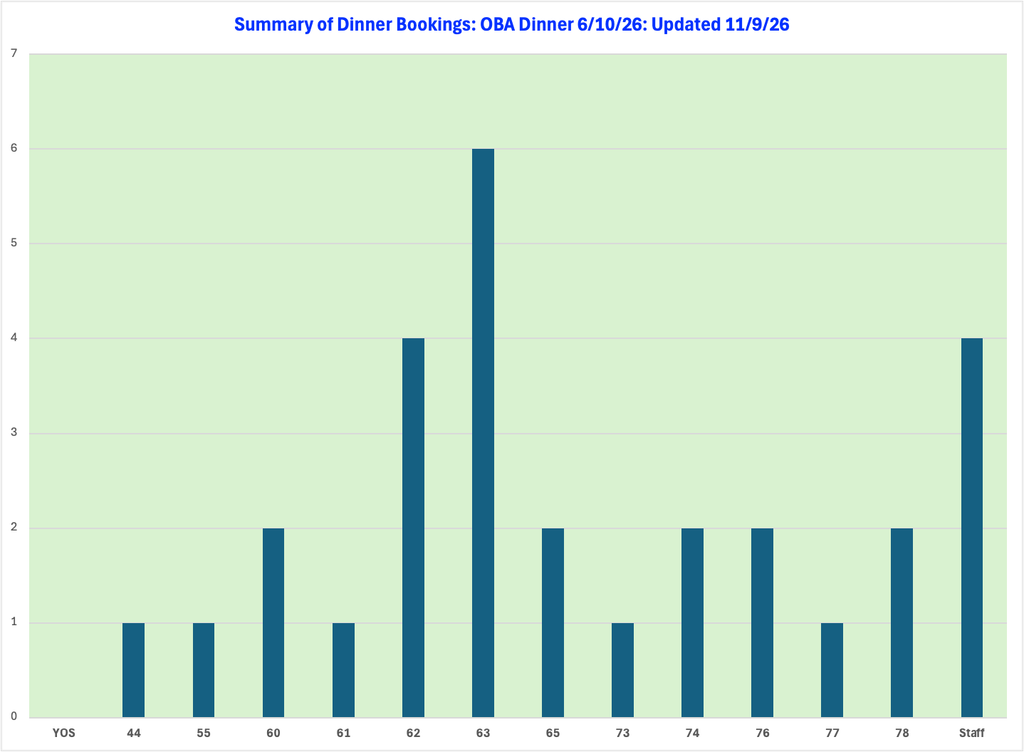
Several year groups are now starting to take a table at our Annual Dinner at Theydon Bois Golf Club on Tuesday 6th October. This year we are returning to the traditional sit down meal and an innovation this time is a choice of menu! Don’t miss out. Why not contact your mates and join us.
Click HERE to navigate to the Dinner details and booking form.
As always you are welcome to use me to communicate your interest in reconnecting with people from your year group whose contact details you may not have.
Here is a summary of bookings by year group so far (year group is start year)
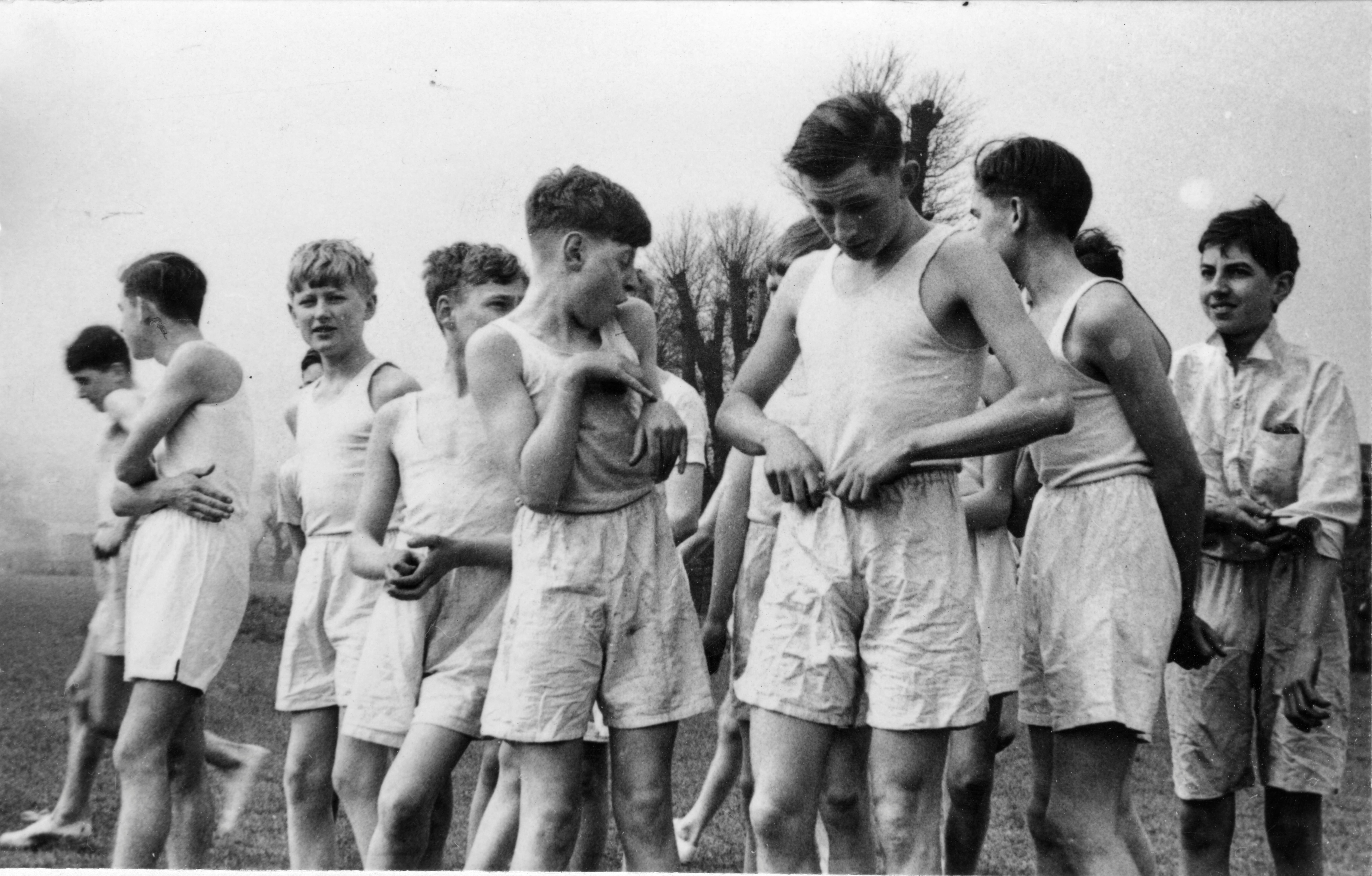
I had a very welcome call this afternoon from Roy Hart, who may possibly be the last remaining pupil from 1938, our school’s first year. Roy phoned to thank me for sending him my spare copy of the 1943 school magazine. We had a wonderfully lively conversation in which he remembered many of his peers and also the teachers.
Roy tells me he is still looking after himself and still driving, just 16 months away from reaching his century. He has been trying to learn the trumpet for several years and now, with the help of an online tutor, he feels he is making some progress.
What a fine example for the rest of us.
Here is a photo taken at the start of the school cross country race in 1942. Roy is third from the left.


 Users Today : 2
 Users Last 7 days : 118
 Users Last 30 days : 907
 Users This Year : 3643
 Total Users : 3644